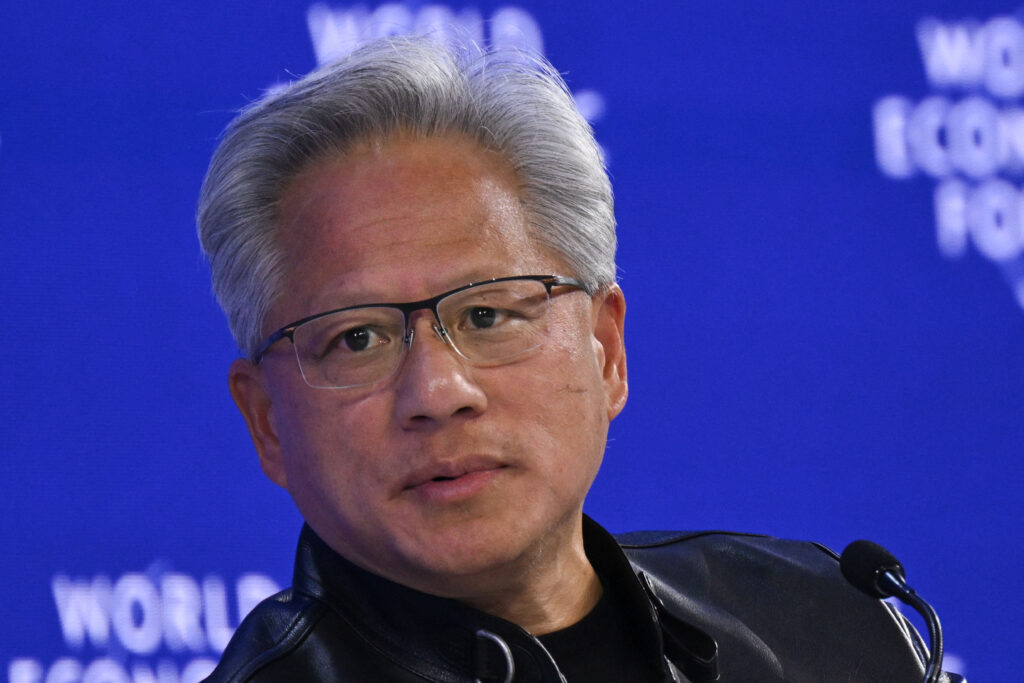
Jensen Huang resigns as Nvidia chief executive

Shares in chipmaker slide after group says chief financial officer Colette Kress to take over as interim head
Black Sea Wire Analysis
Why it matters
For Nvidia, a change at the top is also a test of how much investors value leadership separately from the business itself. Jensen Huang’s departure raises questions about strategic continuity, decision-making and succession that strong demand for computing power cannot, by itself, answer.
The immediate market reaction is best understood as an increase in uncertainty, not proof that the company’s commercial prospects have deteriorated. Investors must now assess whether the leadership transition changes expected earnings, the confidence attached to those forecasts, or both. Even unchanged profit expectations can support a lower share price if shareholders demand greater compensation for risk.
Naming finance chief Colette Kress as interim leader offers an internal bridge rather than an immediate commitment to a new strategic direction. Her existing role suggests familiarity with the company’s financial constraints and investment choices. But the interim designation leaves an important question unresolved: who will ultimately have the authority and mandate to shape Nvidia’s next phase?
That matters because competition in advanced computing involves more than delivering individual chips. Product development, software support, manufacturing commitments and customer relationships must work together over long periods. A leadership handover could complicate those decisions if responsibilities become unclear. Conversely, a well-managed transition would demonstrate that the organisation’s capabilities extend beyond one executive.
Customers and suppliers will therefore look for operational reassurance, while investors will want a credible succession process and clarity about capital allocation. There is no basis in the information provided to conclude that orders, product plans or financial guidance have changed. Nor does the announcement establish why Huang is leaving. Those gaps make confident predictions about a strategic reversal premature.
The broader significance is a reminder that leadership risk can become valuation risk very quickly. Funds with substantial Nvidia exposure could feel the effects even without changing their assessment of the technology sector. The central test now is whether the board can reduce uncertainty without disrupting execution. A falling share price captures the initial concern; the quality of the handover will determine whether that concern proves temporary or lasting.
Key takeaways
- The share-price decline reflects greater uncertainty, not necessarily weaker business prospects.
- An internal interim appointment provides continuity but leaves permanent succession unresolved.
- Clear responsibilities and disciplined execution will determine whether leadership risk persists.